

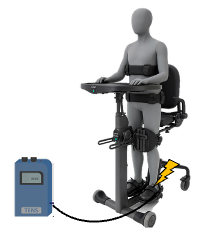
Bladder dysfunction significantly impacts quality of life in people with SCI, but rehabilitation options for managing bladder symptoms in SCI have been scarcely considered. Previous research has shown that there is important overlap between the part of the spinal cord that sends nerves to the bladder and the part of the spinal cord that receives sensory information from the legs. Other research has shown that walking programs, which inherently involve giving sensation to the feet through the soles, can improve bladder function in people with SCI. In this study, we will continue to explore these relationships by evaluating the potential effects of combining electrical leg stimulation and standing therapy on bladder symptoms.
What are we studying?
- We think there are neural connections between the leg and pelvic floor muscles
- We know the pelvic floor muscles are important for bladder function
- We want to examine whether ankle stimulation combined with standing therapy can affect bladder symptoms
Why should you participate?
- Help researchers understand the neural links between the legs and bladder control after SCI.
- Contribute to the development of future therapies for bladder dysfunction after SCI.
- Some participants may experience improvements in their bladder function, although the extent and duration of any change are neither known nor guaranteed.
You may be eligible to participate in this study if you:
- Are at least 19 years of age
- Have a spinal cord injury (SCI) that occurred at least 12 months ago
- Have symptoms of urinary dysfunction from your SCI
- Able to use a standing frame
You may not be eligible to participate if you:
- Have received Botulinum toxin-A on the bladder in the past two weeks or intend to receive it within the next 3 months
- Have a progressive or non-stable SCI (e.g. spinal tumor)
- Have a condition that limits exercise or electrical stimulation
- Are able to walk as your main mode of daily mobility
Additional inclusion/exclusion criteria may apply. Please reach out to our research team for more details.
Time commitment:
- This study involves a 3-month intervention of 3 sessions per week with the EasyStand standing frame.
- There are two lab visits (before and after the intervention) and follow-up phone call surveys 1, 2, and 3 months after the intervention
Compensation for participation: The decision to participate is up to you. If you decide to participate, you will receive an honorarium.
This study will take place at: Blusson Spinal Cord Centre.
For more information or to sign up to participate, please contact study coordinator Yao Sun by email or phone at 604-675-8815.
